Piano storage
How we protect your piano, step by step
Every instrument is wrapped, padded and racked the way a specialist would protect their own.
Book storagePiano storage
Every instrument is wrapped, padded and racked the way a specialist would protect their own.
Book storageThe wrap
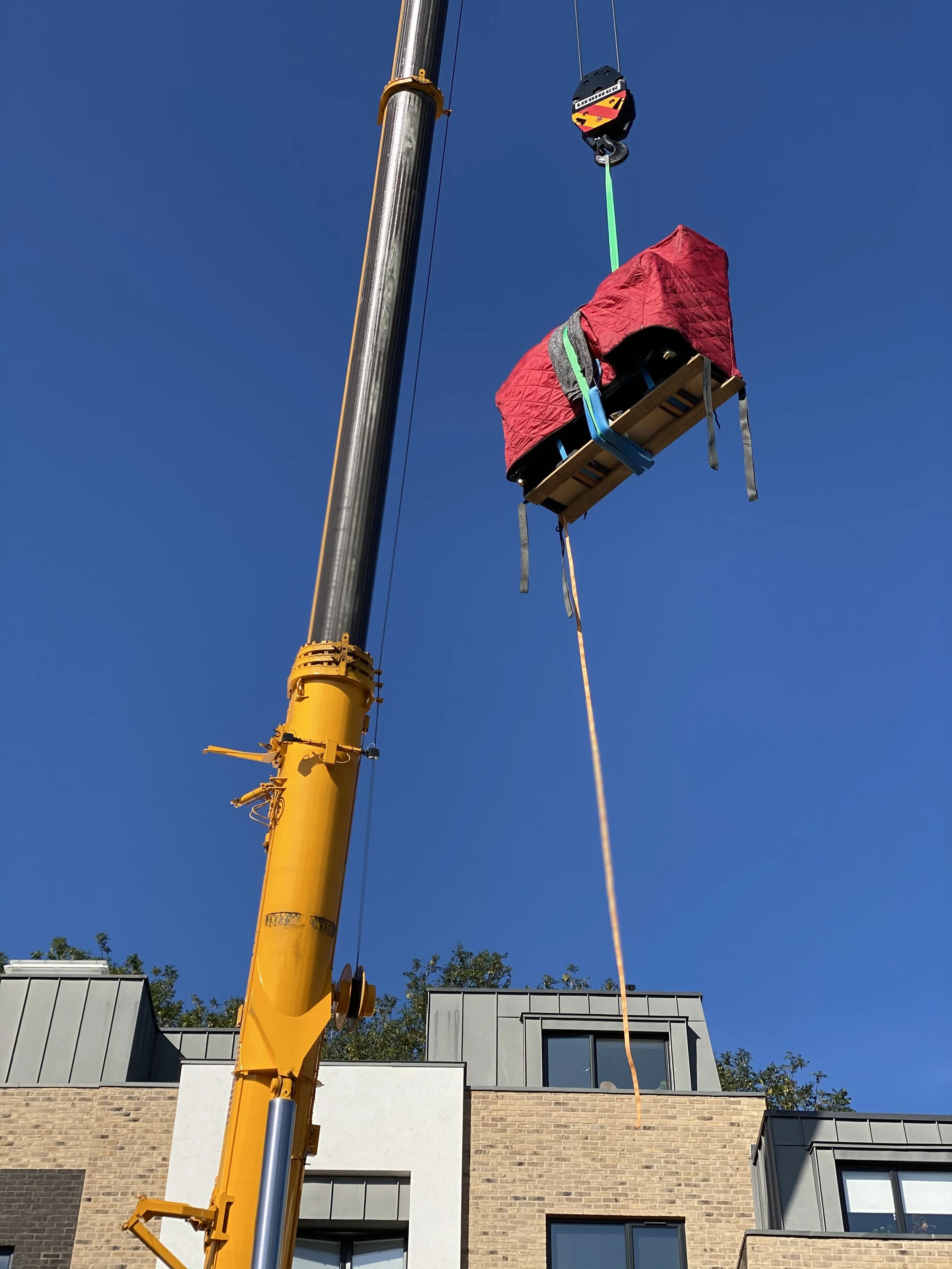
The first thing your piano gets is a top-of-range, triple-thickness fitted transit cover. These are not moving blankets thrown over the top and taped down. They are shaped to the instrument, padded through three layers, and they stay on from the moment we collect to the moment we set the piano back down.
The cover does two jobs at once. It absorbs knocks and pressure during the lift and the journey, and it keeps the case clean and stable while the piano sits in storage. The polished finish on a piano is one of the easiest parts to mark and one of the most expensive to put right, so it never travels bare.
Grands come apart safely
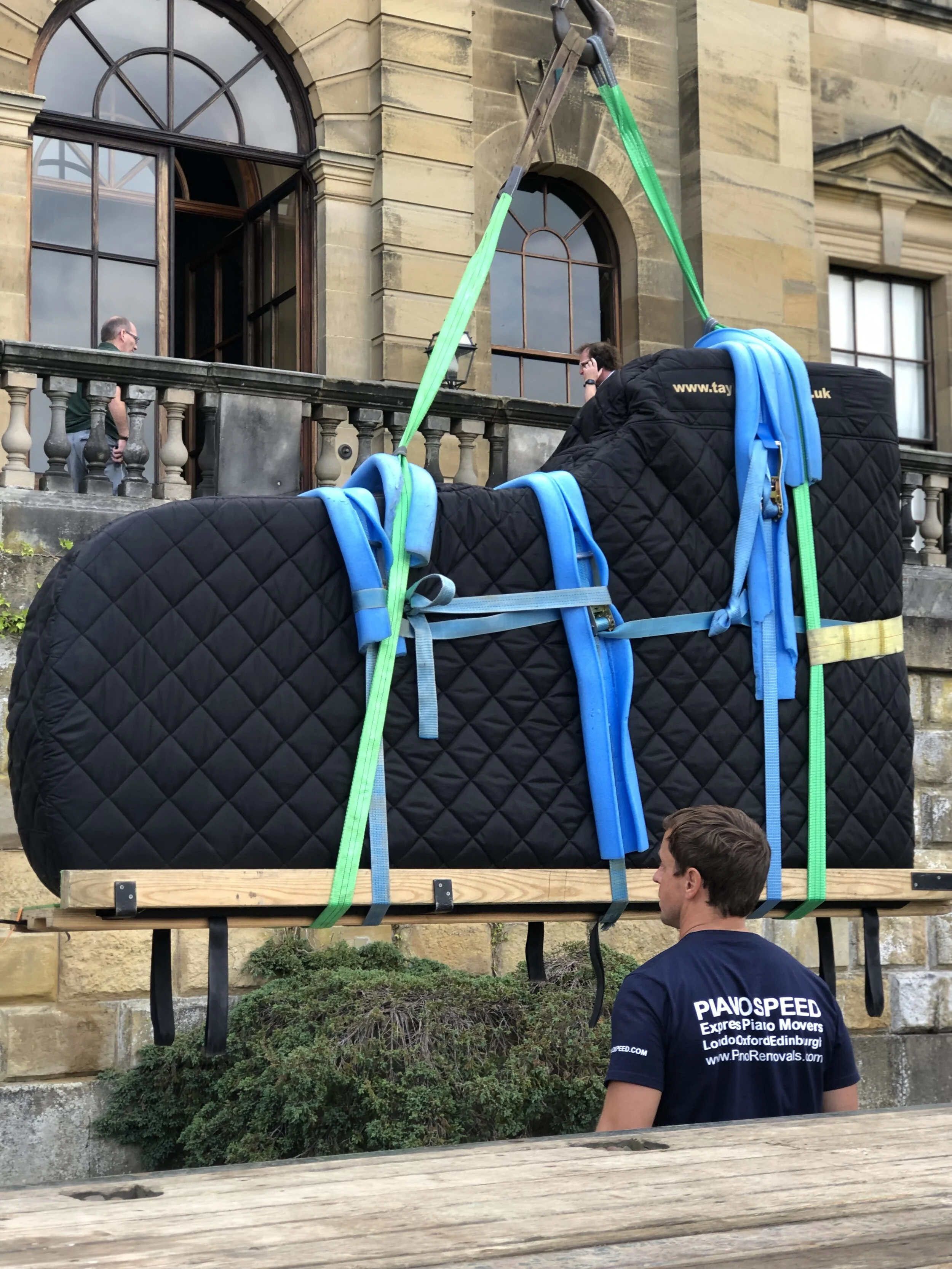
A grand is not stored on its own legs. The crew lowers it onto a padded board, removes the legs and the pedal lyre, and each one goes into its own individual padded bag. Bagging them separately stops the legs knocking against each other and protects the threaded fittings that hold them to the body.
Those bagged parts are then stowed in a heavy-duty crate that travels and stores alongside the instrument, so nothing ends up loose, mismatched or mislaid. When the piano comes back out, the same legs and lyre go back onto the same body, and the geometry is exactly as it was.
Inside the store
Once a piano is wrapped and, for a grand, broken down, it goes onto climate-controlled racking inside the facility. Pianos are kept up off the floor and properly spaced, never stacked against each other or pushed into a corner. Air can move around each instrument, and nothing leans on anything else.
The room itself holds steady temperature and humidity all year, which is the part a garage or a general self-store unit simply cannot do. A wrapped piano in a stable room is what protects the soundboard, the pinblock and the tuning over months and years.
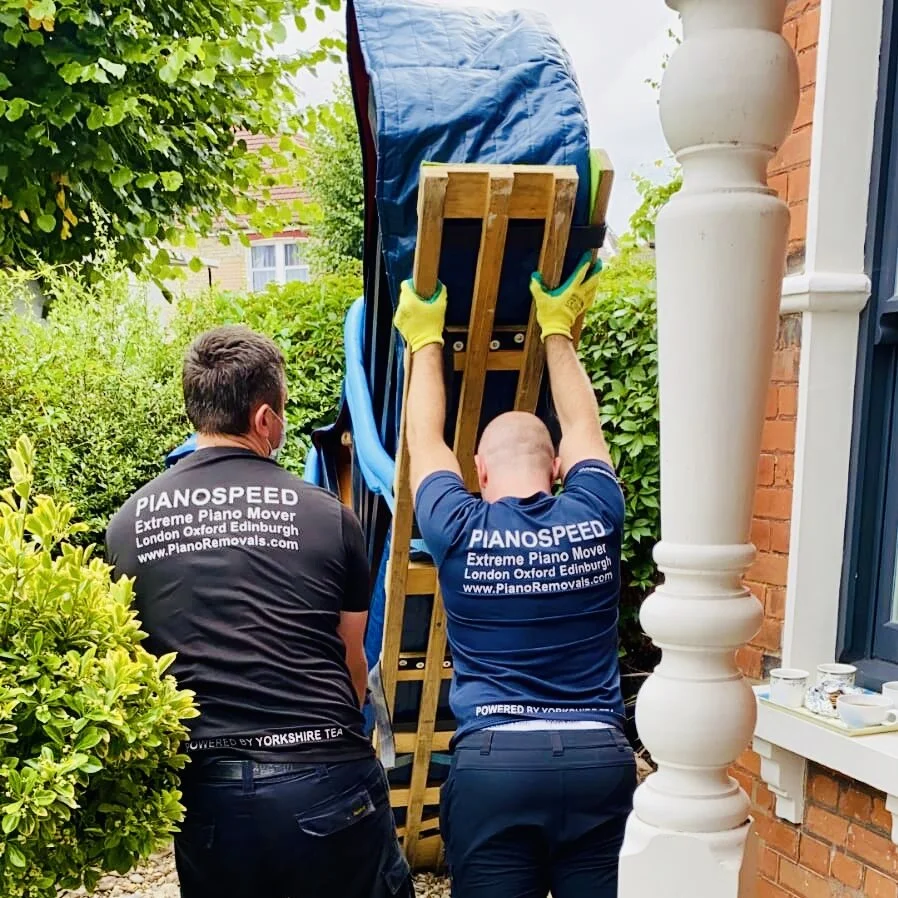
How the crew works
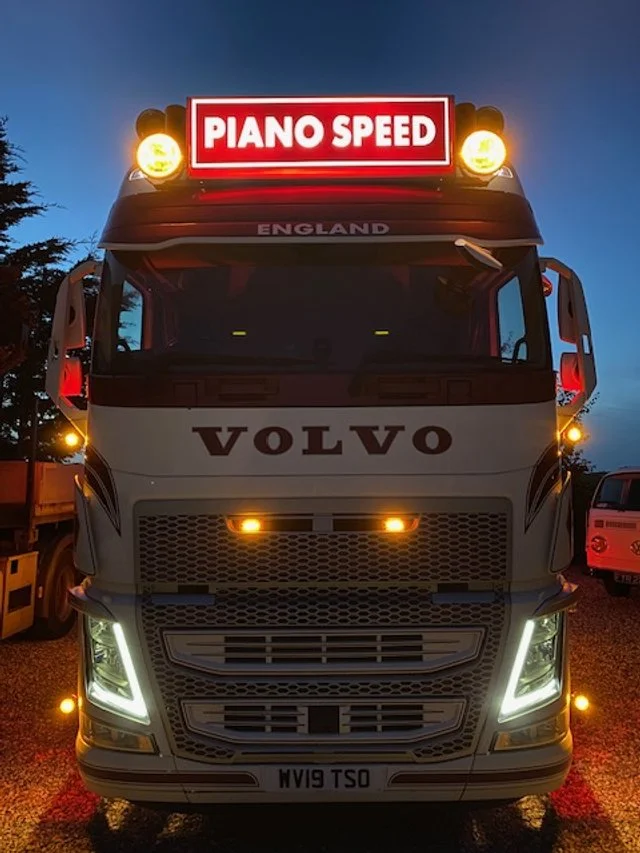
The people who collect and re-deliver your piano are specialist piano crews, not general labour hired by the hour. They know how a piano carries its weight, where it is fragile, and how to take it through a doorway, around a turn or down a step without straining the case or the action.
Pianos are moved on proper piano skates and padded straps, secured for the journey so they do not shift, and handled the same careful way on the way back out. The aim is simple. Your piano comes back in the same condition it left, ready to settle and be tuned.
Questions
It goes into a top-of-range, triple-thickness fitted transit cover shaped to the instrument. The cover stays on from collection through the whole time in storage, protecting both the polished finish and the case from knocks and pressure.
Yes. A grand is lowered onto a padded board and the legs and pedal lyre are removed by hand. Each part goes into its own padded bag and is stowed in a heavy-duty crate that stays with the piano, so nothing is knocked, lost or mismatched.
Neither. Every instrument is kept up off the ground and properly spaced, with air able to move around it. Uprights are stored upright and grands are stored flat on padded boards, and nothing leans on anything else.
Specialist piano crews, not general labour. They use piano skates and padded straps, know where a piano is fragile, and secure it in the vehicle so it cannot shift. The same kind of crew brings it back when you are ready.
Our crews are used to stairs, turns and narrow access and handle them carefully. Stair access is chargeable and is priced clearly when you book online, so you can see the cost before you confirm.
That is the whole point of the process. Careful wrapping, separate bagging for grand parts, stable climate-controlled storage and specialist handling all mean the instrument comes back in the same condition, ready to settle and be tuned.
More on storage
We collect, protect and re-deliver. You only pay for the time you use.
Get an instant price